Afghanistan

More overland evacuations of Americans from Afghanistan: State Department

One more U.S. citizen and two more lawful permanent residents evacuated Afghanistan via overland routes Tuesday, according to State Dept. spokesperson Ned Price.

The State Department provided guidance to them, engaged the Taliban on their safe passage, and had consular officials on the other side of the border to greet them, he said.

Price declined to say which country they transited to, but said these overland evacuations have taken different routes.

To date, at least 36 U.S. citizens and 24 Green Card holders have been evacuated since the U.S. military completed its withdrawal — including seven U.S. citizens and 13 Green Card holders via overland routes in total.

Yet, the agency still said the number of American citizens who want to leave is still 100. Despite growing skepticism about that number, Price — just as Blinken did Tuesday and Monday — said the number is “dynamic” because the situation is so fluid, with some Americans changing their minds about seeking U.S. help, especially as they see that “we are living up to our commitment … in safe and effective ways.”

He also implied that the lists of other Americans that aid groups, lawmakers and others have often don’t end up including folks who aren’t U.S. citizens, but the “distant relatives” and friends of Americans who come asking for help.

The U.S. continues to talk to the Taliban, but those discussions are largely about Americans’ safe passage, according to Price, calling them “pragmatic,” “technical” and “focused on practical issues.”

There’s still been no evacuations from Mazar-e-Sharif, the northern city where chartered planes had been organized but barred from taking off. Price said they’re not aware of any flights departing there, but again admitted the limits of U.S. power here saying the U.S. had pulled “every lever” available to get these flights out.


Sep 14, 8:21 pm

7 Marines injured in attack at Kabul airport remain at Walter Reed

Seven Marines injured in the Aug. 26 terror attack at the airport in Kabul remain under care at Walter Reed, according to a Marine Corps statement released Tuesday night.

Two are listed in critical, but stable condition, the statement said, and five are in serious, but stable condition.

The service will not confirm the names of the wounded Marines or indicate which units they serve in, “in an effort to protect their privacy,” said Capt. Johnny Henderson, Marine Corps spokesperson.


Sep 14, 2:46 pm

Funerals being held for service members killed in Kabul airport bombing

Public funerals are being held this week for the service members killed in last month’s ISIS-K suicide bombing at Hamid Karzai International Airport in Kabul.

On Tuesday, thousands attended a public funeral at Veterans Memorial Stadium in Lawerence, Massachusetts, for Sgt. Johanny Rosario Pichardo, one of two women killed in the attack.
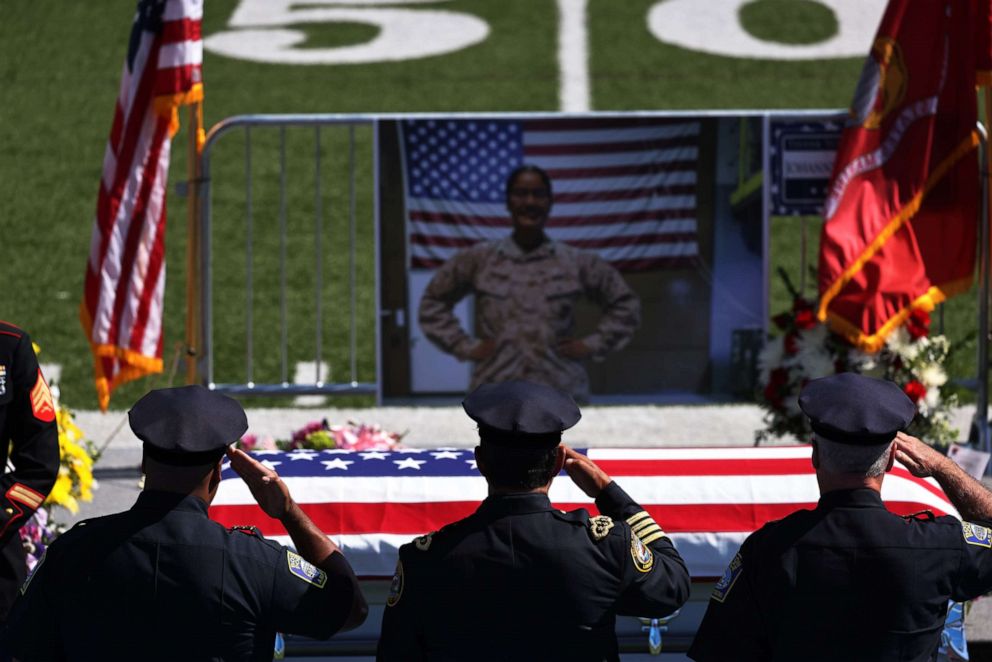
PHOTO: Police officers salute the casket of Sgt. Johanny Rosario Pichardo during her public viewing at Veterans Memorial Stadium, Sept. 14, 2021, in Lawrence, Massachusetts.
Michael M. Santiago/Getty ImagesPolice officers salute the casket of Sgt. Joh…Read More

A funeral service was held Monday morning in Milan, Ohio, for Navy Corpsman Maxton Soviak, 22, at the Edison High School Stadium — Soviak’s alma mater.
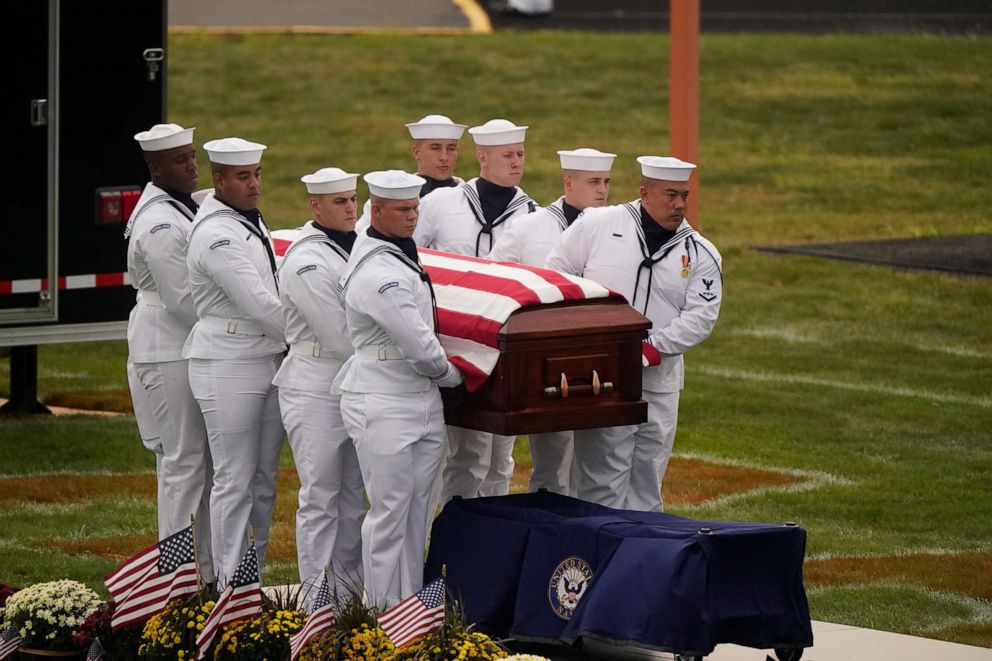
PHOTO: The U.S. Navy Honor Guard carries the casket of Navy Corpsman Maxton Soviak at Edison High School Stadium, Monday, Sept. 13, 2021, in Milan, Ohio.
Tony Dejak/APThe U.S. Navy Honor Guard carries the cas…Read More
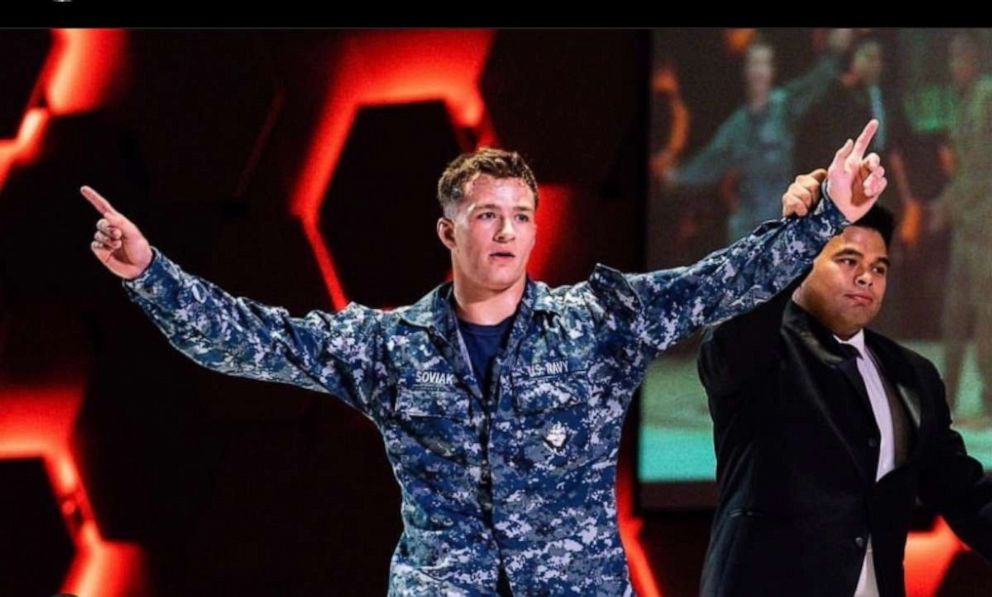
PHOTO: Max Soviak was killed along with 12 other U.S. service members in a suicide bombing outside Hamid Karzai International Airport in Kabul, Afghanistan, Aug. 26, 2021.
Provided by U.S. NavyMax Soviak was killed along with 12 other…Read More

On Sunday, residents of Logansport, Indiana, watched the funeral procession of Marine Corps Cpl. Humberto Sanchez, 22, as his body was returned to his hometown.
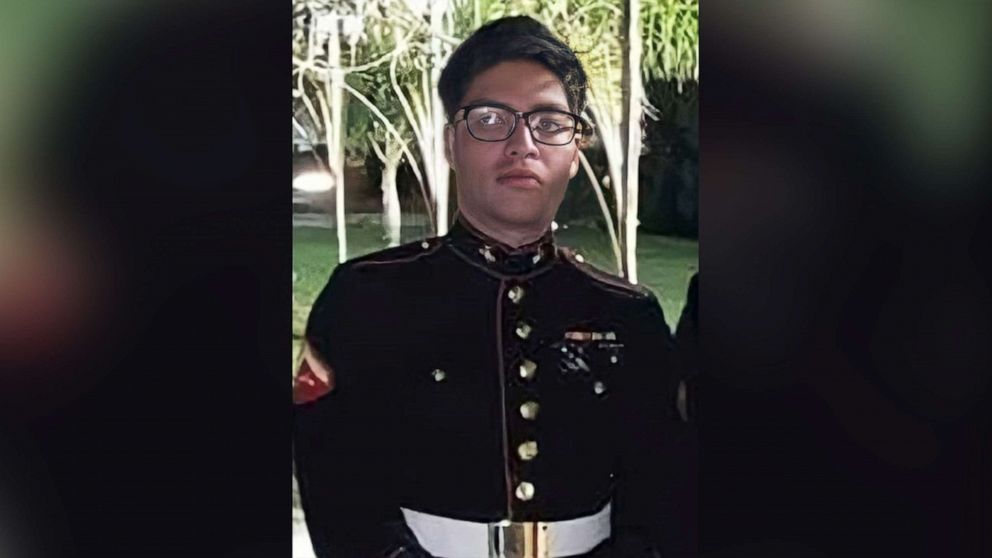
PHOTO: An undated photo of Humberto Sanchez, 22, a Marine among the thirteen U.S. service members who were killed in a deadly airport suicide bombing in Kabul, Afghanistan on Aug. 26, 2021.
U.S. Marines via ReutersAn undated photo of Humberto Sanchez, 2…Read More

-ABC News’ Meredith Deliso, Miles Cohen, Luis Martinez, and Jennifer Watts


Iran


Daud Khattak
By Daud Khattak
January 17, 2019
The Taliban’s Delusion Hampers Reconciliation
Credit: 1st Lt. Verniccia Ford

Daud Khattak

By January 17, 2019

The Taliban’s Delusion Hampers Reconciliation
Credit: 1st Lt. Verniccia Ford

ADVERTISEMENTnull

Daud Khattak

By January 17, 2019

The Taliban’s Delusion Hampers Reconciliation
Credit: 1st Lt. Verniccia Ford

ADVERTISEMENTnull

Daud Khattak

By January 17, 2019

The Taliban’s Delusion Hampers Reconciliation
Credit: 1st Lt. Verniccia Ford

ADVERTISEMENTnull

long shared border, Iran has a somewhat complicated relationship with Afghanistan. Revolutionary Iran’s tumultuous birth coincided with the Soviet Union’s invasion of Afghanistan some four decades ago. Since then, Iran’s attempts to preserve its interests in conflict-ridden Afghanistan have not received much attention from the outside world, but it remains one of the most important neighboring countries for Tehran’s foreign policy.

Iran is an ambitious regional player with a clear understanding of its complex surroundings and a cautious plan to chart a path through them. The complicated nature of Iran’s relations with Afghanistan is in part a result of the fluctuating pattern of its interactions with the relevant stakeholders, which are meditated by the interplay of many identity or interest groups and intermediaries that have the potential for influencing social, political, and economic developments in what is a deeply contested society. More often than not, these groups and intermediaries have conflicting positions in Afghan society.

Another part of Iran’s complicated ties with Afghanistan can be attributed to its unremitting opposition to the United States, which is a strong partner of the Kabul regime. As a Shi’a-dominant country, Iran had a long history of ideological differences and political rivalry with the Afghan Taliban. During the ill-fated Taliban regime in the late 1990s, Iran supported the anti-Taliban Northern Alliance, a non-Pashtun coalition of other ethnic groups. Although Iran held back-channel diplomatic talks with the U.S. following the terrorist attacks of Sept. 11, 2001 on how to stabilize Afghanistan and eliminate al-Qaeda, several structural barriers prevented the informal talks from being institutionalized.

At present, an important dimension of Iran’s understanding of the Afghan crisis is related to how it perceives its relations with Washington. For a long time now, Tehran has been pursuing a risky policy of “hedging” in Afghanistan — simultaneously providing support to the Afghan government and the Taliban in the hopes of keeping them divided and influencing political developments once the U.S. draws down its forces. Due to this seemingly contradictory dual policy — one ambivalent and one conciliatory, one overt and one covert — it is difficult to analyze Iran’s intentions and influence in Afghanistan.

Tehran and the Taliban

There have been many reports of tactical understandings between Tehran and the Taliban. This stands in sharp contrast to the era of the Taliban regime, which received patronage from Saudi Arabia, Iran’s arch rival. However, in the post-9/11 world order, old attitudes changed as new geopolitical realities emerged. One such change was Saudi-Taliban ties, as it became hard for the Saudis to favor the Taliban at the cost of its traditional ally, the U.S. In recent years, Saudi Arabia’s harsh stance against Qatar, where the Taliban maintains its political office, and Qatar’s improved relations with Tehran have helped Iran and the Taliban become closer. This explains Iran’s ability and willingness to play different roles depending on the context and changing circumstances.

Afghanistan’s Shi’a Hazaras, who reside in the Koh-i-Baba Mountains on the western fringe of the Hindu Kush range in central Afghanistan, have deep socio-cultural bonds with Iran. During the years of the Afghan civil war, many Hazaras looked to Tehran as a counterweight to the Sunni Taliban. Iran also hosts millions of Hazara refugees who fled the miserable conditions in Afghanistan for a better life. There have been confirmed reports of Tehran dispatching young Hazaras to fight on behalf of the Assad regime in Syria as part of the Fatemiyoun Division, motivated by promises of money and permanent residency in Iran.

Despite being historically anti-Taliban, Tehran seems to have changed its tune on the understanding that the Taliban would no longer persecute Shi’a Hazaras. The Taliban has also reciprocated, and the reason seems tactical. Ahead of the intra-Afghan talks, the Taliban has pulled out all the stops to gain legitimacy among Afghan Hazaras. For instance, the Taliban’s newly appointed northern district governor, Mawlawi Mahdi Mujahid, is an ethnic Hazara Shi’a cleric. In a recent video message, Mujahid asked his co-religionists to fight against the “Jewish and Christian invaders.” He said, “Weren’t you holding our flags alongside the Sunni brothers in jihad against [the] Soviets? How can you forget that history? Why are you silent against these invaders led by the Americans?” Clearly, Mujahid’s utterances and political messaging are in tune with the Taliban’s anti-Western narrative.

It is also perhaps the first time the Taliban


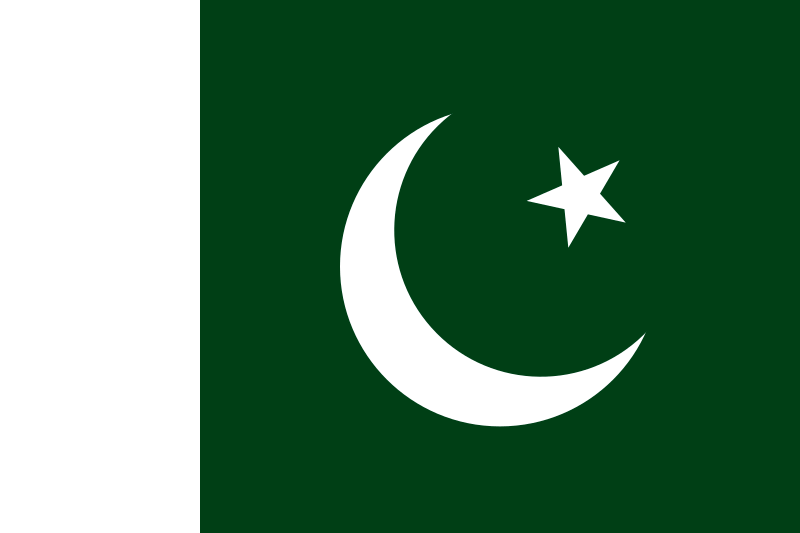
Pakistan mean

Pakistan is the site of several ancient cultures, including the 8,500-year-old Neolithic site of Mehrgarh in Balochistan,[13] and the Indus Valley Civilisation of the Bronze Age, the most extensive of the civilisations of the Old World.[14] The region that comprises the modern state of Pakistan was the realm of multiple empires and dynasties, including the Achaemenid; briefly that of Alexander the Great; the Seleucid, the Maurya, the Kushan, the Gupta;[15] the Umayyad Caliphate in its southern regions, the Hindu Shahi, the Ghaznavids, the Delhi Sultanate, the Mughals,[16] the Durranis, the Sikh Empire, British East India Company rule, and most recently, the British Indian Empire from 1858 to 1947.

Spurred by the Pakistan Movement, which sought a homeland for the Muslims of British India, and election victories in 1946 by the All-India Muslim League, Pakistan gained independence in 1947 after the Partition of the British Indian Empire, which awarded separate statehood to its Muslim-majority regions and was accompanied by an unparalleled mass migration and loss of life.[17] Initially a Dominion of the British Commonwealth, Pakistan officially drafted its constitution in 1956, and emerged as a declared Islamic republic. In 1971, the exclave of East Pakistan seceded as the new country of Bangladesh after a nine-month-long civil war. In the following four decades, Pakistan has been ruled by governments whose descriptions, although complex, commonly alternated between civilian and military, democratic and authoritarian, relatively secular and Islamist.[18] Pakistan elected a civilian government in 2008, and in 2010 adopted a parliamentary system with periodic elections.[19]

Pakistan is a middle power, and has the world’s sixth-largest standing armed forces. It is a declared nuclear-weapons state, and is ranked amongst the emerging and growth-leading economies,[20] with a large and rapidly-growing middle class.[21] Pakistan’s political history since independence has been characterized by periods of significant economic and military growth as well those of political and economic instability. It is an ethnically and linguistically diverse country, with similarly diverse geography and wildlife. However, the country continues to face challenges, including poverty, illiteracy, corruption and terrorism.[22] Pakistan is a member of the United Nations, the Shanghai Cooperation Organisation, the Organisation of Islamic Cooperation, the Commonwealth of Nations, the South Asian Association for Regional Cooperation, the Islamic Military Counter-Terrorism Coalition, and is designated as a major non-NATO ally by the United States.

There are nothing in world 🌍

tive human psyche. It’s obnoxiously seated in all our endeavours from ancient stories to modern research and development rooms. “In the beginning God created the heaven and the Earth…” goes the Genesis story in Bible. Humans have been conditioned to believe that creating something new is a meaningful purpose of life and is the only way to advance their ambitions. Yet we forget to put a cap on the use.  

The limits of science have never been more glaringly apparent when trying to solve this conundrum. Reliance upon green

“Human life will be negatively affected because of the loss of the many ecosystem benefits and services provided by biological diversity,” says Loria. “For example, water pollution may affect provisioning services, such as food and water, by causing a reduction in food diversity and/or in its quality and safety. Widespread degradation of ecosystems threatens the conditions of life on Earth, in particular the long-term survival of our own species.”

Our impact on the planet is much is deeper than carbon footprints or global warming. It points to a future where the effects of anthropogenic matter will take over – if it hasn’t already – the identity of the Earth and its life. In the face of this, humans themselves might lose out in the evolutionary race.

Eliminating materials like concrete or plastic or replacing them with alternatives is not going to address the fundamental problem with human attitudes and our unparalleled appetite for more. This is exactly where materialism can seamlessly transform into a known unknown risk factor in global catastrophe. The myriad of ways in which it can turn this planet into a mundane world is something our civilisation has never experienced before.

In the absence of a fully secure evolutionary shield, we could depend on our intelligence to survive. Nevertheless, as Abraham Loeb, professor of science at Harvard University and an astronomer who is searching for dead cosmic civilisations puts it, “the mark of intelligence is the ability to promote a better future”.

And all the people are one day die
Design a site like this with WordPress.com
Get started